Ash Templeton
Blood CanticleAsh Templeton is an ancient Taltos whose life joins the species’ remembered history to its later attempt at survival. After telling Rowan Mayfair and Michael Curry how the Taltos had been scattered and driven into hiding, he disappeared with Morrigan, the daughter of Mona Mayfair; years later, their son Oberon identified them as his parents and recounted the collapse of the community Ash had tried to sustain. Their eventual discovery together, dead, closes the story of Ash’s refuge and the search that brought Mona to it.
Identity and Background
Ash was a Taltos survivor who had lived alone for so long that Michael described his isolation as beyond imagining. He had watched his species become extinct and told Rowan and Michael the history of the Taltos. His knowledge was not merely inherited lore: it came from a life shaped by the apparent destruction of his people and by his conviction that they could not survive among humans.
Rowan described the Taltos as a distinct mammalian species that evolved apart from Homo sapiens on a volcanic island in the North Sea. They resemble humans but are generally taller and longer-limbed, and their rapid development and reproductive capacity expose them to serious dangers. Michael and Rowan also recounted how human expansion into the British Isles led to conflict, interbreeding, massacres, and the scattering of the Taltos. Ash’s personal account of extinction belongs within that history, though the evidence does not establish his own age, birthplace, or the specific events through which he survived.
The history carries a stark contrast: Taltos are described as less aggressive than humans, yet their differences and reproductive capacities became sources of fear and conflict. The survivors concealed their origins and birthing rites, while interbreeding produced both Taltos with human genes and humans capable of carrying Taltos offspring. Ash’s story therefore reaches the Mayfairs not as a distant legend but as testimony from someone who believed he had outlived his species.
Encounter with the Mayfairs
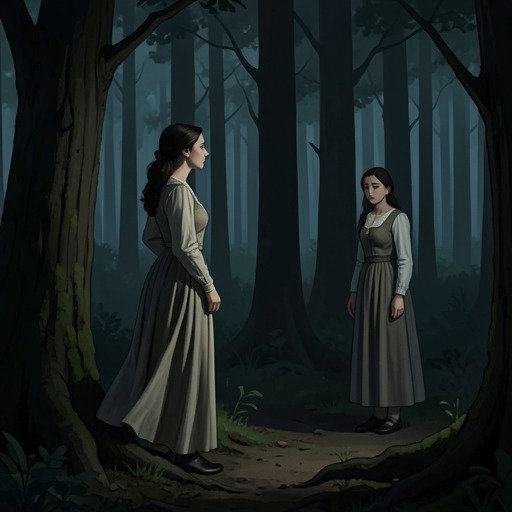
Ash met Rowan and Michael in New York, where they came to love him and pledged eternal friendship. They left him there without knowing that Morrigan existed. After returning home, they discovered her; Ash then came to the Mayfair house, entered the side garden, and saw her through the windows. Morrigan caught his scent and ran to him. Rowan recalled that the adults could not stop either of them, and they never saw the pair again.
Morrigan’s departure was at once a reunion for Ash and a lasting separation for her mother. Mona later learned that Rowan had met the Taltos who took her daughter in Europe and accused the family of withholding that knowledge and allowing Ash to take Morrigan. Rowan replied that Morrigan had been drawn to him and that no one could have prevented her from leaving. Michael said they searched by every conceivable means. He and Rowan had initially believed they should wait for Ash and Morrigan to contact them, respecting their choice to be together; they had not imagined the pair would disappear.
Michael identified the man as Ash Templeton and explained what he had told the family: Ash believed the Taltos could not endure in the human world because he had seen them wiped out. The Mayfairs loved him and had promised lasting friendship, but their affection did not give them knowledge of his later plans or control over his reunion with Morrigan. The relationship thus remains marked by intimacy and uncertainty: Ash shared his people’s history, then chose a future beyond the family’s reach.
Search and Family
The Talamasca began searching for Ash and Morrigan almost immediately, according to Stirling Oliver. It did so unobtrusively and found evidence that they had visited Donnelaith, but the trail went cold. Stirling emphasized that the organization never found another trace of them. The search’s limited result mattered especially to Mona, for whom the question of her daughter’s fate remained unresolved.
The later encounter with Oberon finally connected the missing couple to a surviving Taltos community. Mona approached him as someone who had given birth to Morrigan and loved her, and insisted that Ash had taken her daughter. Oberon recognized the name Ash Templeton as possibly referring to his father, Ashlar. He described himself as born of Morrigan and Ashlar, “Pure as they come,” and said that to him they were Mother and Father. His account establishes Ash as Morrigan’s partner and Oberon’s father, while also showing that the name Ashlar belonged to the family’s own way of identifying him.
Oberon’s words transform the earlier disappearance. Ash had not simply vanished with Morrigan into an unknown life; together they had become the parents of a Taltos community, one that Oberon said numbered twenty. The reunion with his family and the refuge it represented were real, but they did not secure the group’s future. By the time Mona found Oberon, he believed the community had already come apart and that he might be its sole remaining member.
The Secret People and Their End
Oberon remembered Ash as a dreamer who believed a community of Taltos could be maintained through supervision, education, and stimulation. Morrigan, in his account, warned that Ash’s hope was naïve. The community’s members could not remain indefinitely under the control of their parents, however much guidance and activity they were given. Oberon called Morrigan an oracle and Silas a poisoner, locating the community’s destruction in both foresight ignored and internal treachery.
Oberon said he had once wondered whether killing his brother Silas when Silas first spoke of sedition might have prevented what followed, but he also doubted that the Secret People could have continued forever. His reflection does not make Ash responsible for the rebellion or prove that he knew its outcome; it conveys the surviving son’s bitter hindsight about a refuge that was vulnerable both to conflict within and to the impossibility of controlling the future. Ash’s protective vision and its limits remain joined in Oberon’s recollection.
When the group reached Ash and Morrigan, both were dead. Their bodies lay together in an embrace, dressed in white cotton garments and barefoot, with flowers scattered over them. Miravelle recognized them as Mother and Father; Oberon turned away and lamented that Ash had come to this end at the hands of his own sons and daughters, accusing Lorkyn of betraying their parents’ beliefs and questioning whether he had led others to them. The scene confirms Ash’s death and ties it to the destruction of the family and community he had built, although the evidence does not identify who killed him or Morrigan.
Significance
Ash is a crucial link between the Taltos’ ancient history and the present-day Mayfair family. His account gave Rowan and Michael a survivor’s perspective on extinction, concealment, and human conflict; his departure with Morrigan then turned that history into a family mystery, one that Mona’s search would not resolve until she met their son. His absence is therefore active in the plot: it shapes what the Mayfairs do not know, what Mona demands to learn, and what Oberon can finally tell her.
His legacy is deliberately double. Ash’s conviction that the Taltos could not survive among humans accompanied a successful reunion with Morrigan and the creation of a community of their own. Yet the Secret People did not endure: Oberon describes a group unable to remain under parental supervision, divided by Silas’s sedition and ultimately destroyed. Ash’s refuge offered continuity after apparent extinction, but could not guarantee safety or permanence. The discovery of his and Morrigan’s bodies gives that contradiction its final form: the parents who founded a future for the Taltos are found together, while the survival of their children has become uncertain.